
Set the scope and research agenda
Assemble existing studies, compare route and service options, identify missing evidence, and establish a preliminary work program.
Decision basis: an agreed study scope, responsibilities, and research budget.

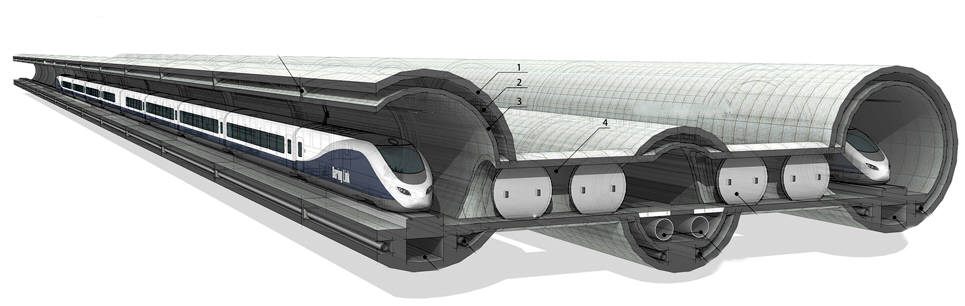
Financing, organization, and cooperation for a proposed intercontinental railway
A Bering Strait tunnel and its connecting railways would require much more than construction capital. They would need a credible transport case, international agreements, community participation, coordinated engineering, and institutions capable of managing a project across borders and generations.
This page outlines how such a program could be studied, financed, and managed. It is intended for developers, researchers, financiers, banks, corporations, public agencies, and other organizations interested in evaluating the concept.
A useful starting point would be a staged program with defined deliverables and independent review. Each stage would inform whether to proceed, revise the scope, postpone work, or stop. Some studies could run in parallel; construction commitments would depend on the necessary agreements, rights, approvals, and financing.
Assemble existing studies, compare route and service options, identify missing evidence, and establish a preliminary work program.
Decision basis: an agreed study scope, responsibilities, and research budget.
Evaluate demand, geology, tunnel safety, rail standards, environmental effects, community interests, costs, and alternatives.
Decision basis: independently reviewed findings and a reasoned recommendation on further development.
Develop arrangements for borders, customs, ownership, land access, permitting, procurement, and allocation of risk among participating parties.
Decision basis: a workable legal and organizational framework, with unresolved issues identified.
Refine engineering and budgets, evaluate commercial agreements, and assess the funding needed for each viable segment.
Decision basis: due diligence, required approvals, and binding financing and delivery agreements before work is committed.
Consider sections with a sound transport purpose, while coordinating the tunnel, connecting lines, terminals, energy supply, and border facilities.
Decision basis: verified completion, safety acceptance, and readiness to operate.
Establish operating responsibilities, maintenance reserves, emergency procedures, performance monitoring, and renewal programs.
Decision basis: continuing safety, service quality, and financial sustainability.
Early research, construction, and long-term operations have different funding needs and risks. A future program could combine several sources, subject to eligibility, lawful participation, and the findings of feasibility studies. No source below is represented as available or committed.
| Approach | Potential role | What would need to be established |
|---|---|---|
| Research grants and institutional study budgets | Fund surveys, demand analysis, environmental baseline work, and independent reviews. | Eligible applicants, a defined scope, reporting obligations, and a funded work program. |
| Public infrastructure funding | Support components with demonstrated public benefits, such as regional access or shared infrastructure. | Public priorities, authorization, budget decisions, procurement requirements, and accountability. |
| Strategic corporate participation | Bring development expertise and capital from transport, logistics, engineering, or other relevant businesses. | A commercial rationale, due diligence, agreed responsibilities, and acceptable risk allocation. |
| Infrastructure funds and institutional capital | Potentially support suitably structured project companies or infrastructure assets. | Credible costs and demand, governance, investment terms, and a lawful transaction structure. |
| Bank lending and project finance | Potentially finance defined construction packages or operating assets. | Reliable repayment sources, contractual protections, security arrangements, and lender approval. |
| Public-private partnerships | Allocate financing, construction, maintenance, and service obligations between public and private parties. | Clear public objectives, affordability, procurement, performance standards, and responsibility for shortfalls. |
| Development finance and export credit | Potentially support eligible infrastructure, equipment, or cross-border trade components. | Institutional mandates, country and project eligibility, applicable restrictions, and formal approval. |
Borrowing or private capital does not eliminate project costs. Studies would need to determine whether freight charges, passenger fares, access charges, contractual service payments, or other lawful revenues could cover operations, maintenance, renewals, and financing obligations. Any public support would require separate decisions; it should never be assumed.
One possible model would combine international coordination with separate entities responsible for particular countries, assets, or construction packages. The appropriate structure would depend on government agreements, commercial arrangements, and applicable law.
Address international agreements, border procedures, regulatory responsibilities, public funding decisions, and coordination between jurisdictions.
Commission studies, coordinate the business case, select advisers, and propose a delivery strategy. Participation and decision-making powers would require negotiated agreements.
Could hold defined assets or contractual rights and take responsibility for financing, procurement, and delivery within an agreed scope.
Develop service plans, technical interfaces, maintenance standards, safety systems, and emergency coordination across the network.
Provide technical and financial review, transparent reporting, and meaningful engagement with affected communities, Indigenous and tribal governments, and landowners.
A governance framework should identify who can approve budgets, change the scope, award contracts, resolve disputes, and suspend work. It should also address conflicts of interest, independent audits, cost reporting, and responsibility for delays or overruns.
The project's scale makes the quality of its evidence especially important. A credible assessment should examine both potential benefits and reasons the proposal might not proceed.
Professional cooperation can begin with a well-defined research question or technical contribution. InterBering welcomes relevant studies, corrections, historical documents, and proposals for substantive discussion.
Please describe your organization, field of expertise, the project component that interests you, and the question or contribution you would like to discuss. Initial inquiries should contain only non-confidential information.
Contact InterBeringContacting InterBering does not create membership, ownership, a partnership, or an entitlement to future project participation.
InterBering brings together information and ideas concerning the proposed connection between North America and Eurasia. A possible future role could involve research coordination, public information, or participation in a professionally organized development effort, subject to the capabilities and agreements required at that time.
Strategic cooperation, organizational restructuring, or a possible acquisition of InterBering or specified assets could be subjects for separate, professionally advised discussions. No transaction terms, valuation, ownership interests, or purchase process are presented here. Any transaction would require due diligence, applicable legal review, and definitive agreements.
The proposed tunnel and railway corridor are not presented as existing assets owned by InterBering. A transaction involving InterBering would not, by itself, confer land rights, construction permits, government concessions, or control of an international infrastructure project. The ownership and transferability of any actual assets or rights would need separate verification.
Progress begins with reliable evidence, clearly assigned responsibilities, and informed cooperation. InterBering's website is a resource for examining the concept and the work that would be necessary to turn it into an actionable development proposal.
This page provides general project information and conceptual discussion. It is not an offer to sell or a solicitation to buy securities, an investment recommendation, or a promise of financing, returns, public listing, or project completion. Any future financing activity would require a separately established legal and regulatory framework.